The Best Sources for Chainlink News, and How to Use Them
In This Article
Introduction
Chainlink is one of the most widely used pieces of infrastructure in crypto, and one of the most misunderstood. It feeds real-world data, such as prices, into blockchains, and it connects blockchains to each other and to traditional finance. That makes its news unusual: much of it is about banks, institutions and other projects using Chainlink's technology, rather than about the LINK token itself.
That gap, between using Chainlink and buying LINK, is behind most of the confusion in Chainlink news. This guide covers what actually moves Chainlink news, the sources worth following (all verified active as of October 2026), the misinformation that keeps coming back, and a short list you can check in a few minutes a day.
Who's Who on Chainlink
- Chainlink is a network of oracles: services that bring outside data, such as asset prices, onto blockchains, and that move messages and tokens between chains.
- LINK is the token used to pay for some Chainlink services and to stake in the network.
- Chainlink Labs is the company that leads much of Chainlink's development and its work with banks and institutions. Sergey Nazarov is Chainlink's co-founder and its most visible spokesperson.
- CCIP (Cross-Chain Interoperability Protocol) is Chainlink's system for moving data and tokens between blockchains, and the subject of much of its institutional news.
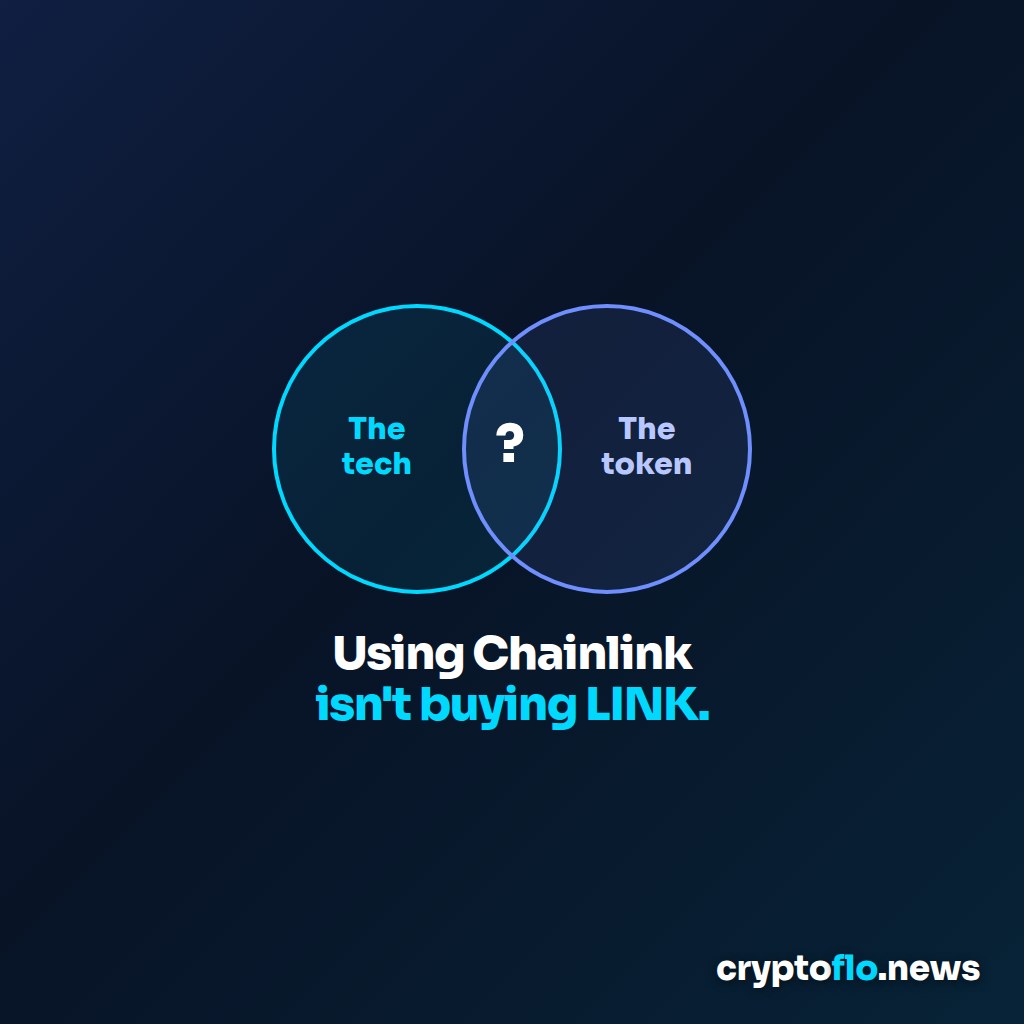
Using Chainlink Isn't the Same as Buying LINK
This is the most important thing to understand when reading Chainlink news. When a bank, a fund or another crypto project "uses Chainlink," it usually means it uses Chainlink's technology, such as its price feeds or CCIP. That's real adoption, and it can matter. But it doesn't automatically mean that organization buys, holds or uses the LINK token. Always ask what the announcement actually says about the token itself.
What Actually Moves Chainlink News
- Institutional and bank pilots. Chainlink has worked with Swift, the global banking messaging network, on experiments connecting banks to blockchains since 2023, and institutional pilots remain a big part of its news. These are often tests and pilots rather than live products, so check which one a headline describes.
- ETF flows. Two spot LINK ETFs trade in the US. Grayscale's Chainlink fund converted to an ETF in December 2025, and Bitwise's Chainlink ETF (CLNK) began trading on NYSE Arca on January 14, 2026. Their flows are a regular signal of institutional demand for the token itself.
- The Chainlink Reserve. Chainlink runs a reserve that buys LINK using revenue from its services, tracked publicly on its own dashboard. Third-party trackers reported in October 2026 that it had passed 6 million LINK. Regular purchases are a common headline, and the dashboard is the place to check the real numbers.
- New integrations. Other blockchains and apps adopting Chainlink's price feeds or CCIP are frequent news. Some are large, many are small, and a press release looks the same either way.
- Staking and token economics. Changes to LINK staking, fees and how revenue flows back to the token affect LINK more directly than most partnership news.
The Best Sources for Chainlink News
Official sources
- Chainlink blog: Chainlink's own announcements on products, integrations, institutional work and the Reserve. The original record for official news.
- Chainlink documentation: where products, supported networks and technical changes are actually documented. If a headline says something is live, the docs usually say where.
- Chainlink's official YouTube channel: talks, product explainers and event coverage, including its annual SmartCon conference.
Data sources: check the claims yourself
- Chainlink Reserve dashboard: the public record of LINK held by the Reserve and its purchase history. Check it before trusting a headline about Reserve buying.
- Chainlink Data Feeds: shows which price feeds are live, on which networks, and how they're performing. The quickest way to check whether an integration is real.
- DefiLlama Oracles: an independent view of how much value in DeFi relies on each oracle provider. Useful for checking big adoption claims against outside data.
Analysts and YouTube creators
Chainlink's news is technical and institutional, so good analysts are among the most useful sources for following it. They explain what a bank pilot or a CCIP integration actually means, separate token news from technology news, put ETF flows and Reserve purchases in context, and walk through the price picture. The best ones show their data and reasoning, separate news from their own view, and disclose sponsorships. Pick a few who do that consistently, and pair them with the official and data sources above.
Reporters: established newsrooms
- The Block and Cointelegraph cover Chainlink regularly, including institutional pilots, ETF filings and integrations.
Chainlink Misinformation to Watch For
- "Swift is adopting LINK." Swift has run experiments with Chainlink's technology, but that's not the same as Swift buying or using the LINK token. Check what the announcement actually says, ideally on Swift's or Chainlink's own site. (Our guide to reading crypto project announcements covers how.)
- Pilots reported as live products. Many institutional stories describe tests or proofs of concept. They're real progress, but not the same as a bank running live money through Chainlink.
- Every integration is a big deal. Hundreds of projects use Chainlink price feeds. A small project announcing an integration isn't the same as a major institution adopting it.
- Fake staking and airdrop sites. Sites offering "LINK rewards" or asking you to connect your wallet to claim tokens are a common scam. Real staking information is on Chainlink's official site and documentation. (More in how to spot fake crypto news.)
- Huge headline numbers without context. Chainlink and others publish large figures for the value its services secure or enable. They're worth knowing, but check what's being measured before treating one as a revenue or price signal.
- Targets with no reasoning. A price target is an analyst's view, not news. From someone who shows their data and reasoning, it's worth weighing. A big round number with no case behind it isn't analysis.
A Simple Chainlink Source List
You don't need all of these. A lean list might be:
1. The Chainlink blog, for official announcements
2. The Chainlink Reserve dashboard, when Reserve buying is in the news
3. Chainlink Data Feeds or the docs, to check whether an integration is live
4. DefiLlama Oracles, for an independent view of adoption
5. One newsroom, such as The Block or Cointelegraph, for daily news
6. One or two analysts you trust, for context and the bigger picture
Our 15-minute routine shows how to fit a list like this into your day, and our guide to choosing crypto news sources you can trust explains the thinking behind it.
Where Crypto Flo Fits
Chainlink is one of the 15 coins Crypto Flo supports. Crypto Flo is a personalized AI crypto intelligence platform that turns the coins you follow and the sources you choose into a daily audio or text briefing. For each coin it maintains a vetted library of at least 10 YouTube channels and 10 news outlets, and you choose which of them brief you. The sources above are our editorial picks for this guide. Crypto Flo's own library is separate, and you choose from it inside the app. See how Crypto Flo works.
Frequently Asked Questions
Q: What is the best source for Chainlink news?
A: There isn't one. A good mix is the Chainlink blog for official announcements, the Reserve dashboard and Data Feeds page to check claims, DefiLlama for an independent view of adoption, one established newsroom such as The Block or Cointelegraph, and one or two analysts who show their reasoning.
Q: Does using Chainlink mean buying LINK?
A: Not necessarily. Many organizations use Chainlink's technology, such as its price feeds or CCIP, without buying or holding the LINK token. Check what an announcement actually says about the token.
Q: Is there a Chainlink ETF?
A: Yes. Grayscale's Chainlink fund converted to an ETF in December 2025, and Bitwise's Chainlink ETF, ticker CLNK, began trading on NYSE Arca on January 14, 2026.
Q: What is the Chainlink Reserve?
A: It's a reserve that buys LINK using revenue from Chainlink's services, with its holdings and purchases shown on a public dashboard at reserve.chain.link. Third-party trackers reported in October 2026 that it held more than 6 million LINK.
Q: Is Swift using Chainlink?
A: Swift has run experiments with Chainlink's technology since 2023, exploring how banks could connect to blockchains. That's different from Swift buying or using the LINK token, and many of these projects are tests rather than live products.
Q: What is CCIP?
A: CCIP, the Cross-Chain Interoperability Protocol, is Chainlink's system for moving data and tokens between blockchains. It's the focus of much of Chainlink's work with banks and institutions.
The Bottom Line
Chainlink news is mostly about technology, institutions and integrations, and the key question is always whether a story involves the LINK token itself. Use the Chainlink blog and docs for official news, the Reserve dashboard, Data Feeds and DefiLlama to check the numbers, a good newsroom for daily coverage, and a couple of trusted analysts for context. Separate pilots from live products and tech adoption from token demand, and you'll read Chainlink news better than most of the timeline.
This content was created with AI assistance and may contain errors, always verify before acting. Not financial advice. Always do your own research before making any investment decisions.
Frequently Asked Questions
What is the best source for Chainlink news?
There isn't one. A good mix is the Chainlink blog for official announcements, the Reserve dashboard and Data Feeds page to check claims, DefiLlama for an independent view of adoption, one established newsroom such as The Block or Cointelegraph, and one or two analysts who show their reasoning.
Does using Chainlink mean buying LINK?
Not necessarily. Many organizations use Chainlink's technology, such as its price feeds or CCIP, without buying or holding the LINK token. Check what an announcement actually says about the token.
Is there a Chainlink ETF?
Yes. Grayscale's Chainlink fund converted to an ETF in December 2025, and Bitwise's Chainlink ETF, ticker CLNK, began trading on NYSE Arca on January 14, 2026.
What is the Chainlink Reserve?
It's a reserve that buys LINK using revenue from Chainlink's services, with its holdings and purchases shown on a public dashboard at reserve.chain.link. Third-party trackers reported in October 2026 that it held more than 6 million LINK.
Is Swift using Chainlink?
Swift has run experiments with Chainlink's technology since 2023, exploring how banks could connect to blockchains. That's different from Swift buying or using the LINK token, and many of these projects are tests rather than live products.
What is CCIP?
CCIP, the Cross-Chain Interoperability Protocol, is Chainlink's system for moving data and tokens between blockchains. It's the focus of much of Chainlink's work with banks and institutions.
Let AI summarize these channels for you daily
Pick your favorite crypto YouTube channels and news sites. Get a 5-minute AI brief every morning.
Choose Your Sources