The Best Sources for Cardano News, and How to Use Them
In This Article
Introduction
Cardano news has a shape all its own. Big upgrades arrive through named hard forks, and the community itself votes on them. A treasury is spent by on-chain governance. Its founder is one of the most-watched voices in crypto. That makes Cardano unusually easy to verify, because so much of what matters happens on-chain and in public. It also makes it a favorite target for rumors, deepfakes and dates that get repeated long after they've changed.
This guide covers what actually moves Cardano news, the best sources to follow (all verified active as of October 2026), the misinformation that keeps coming back, and a short list you can check in a few minutes a day.
Who's Who on Cardano
- ADA is the native token of the Cardano network. It pays transaction fees and is staked to help secure the network.
- Input Output (IO, formerly IOHK) is the engineering company founded by Charles Hoskinson that built much of Cardano's core technology.
- The Cardano Foundation is a Swiss non-profit focused on adoption, standards and the ecosystem.
- Intersect is a member-based organization that coordinates Cardano's development and governance work.
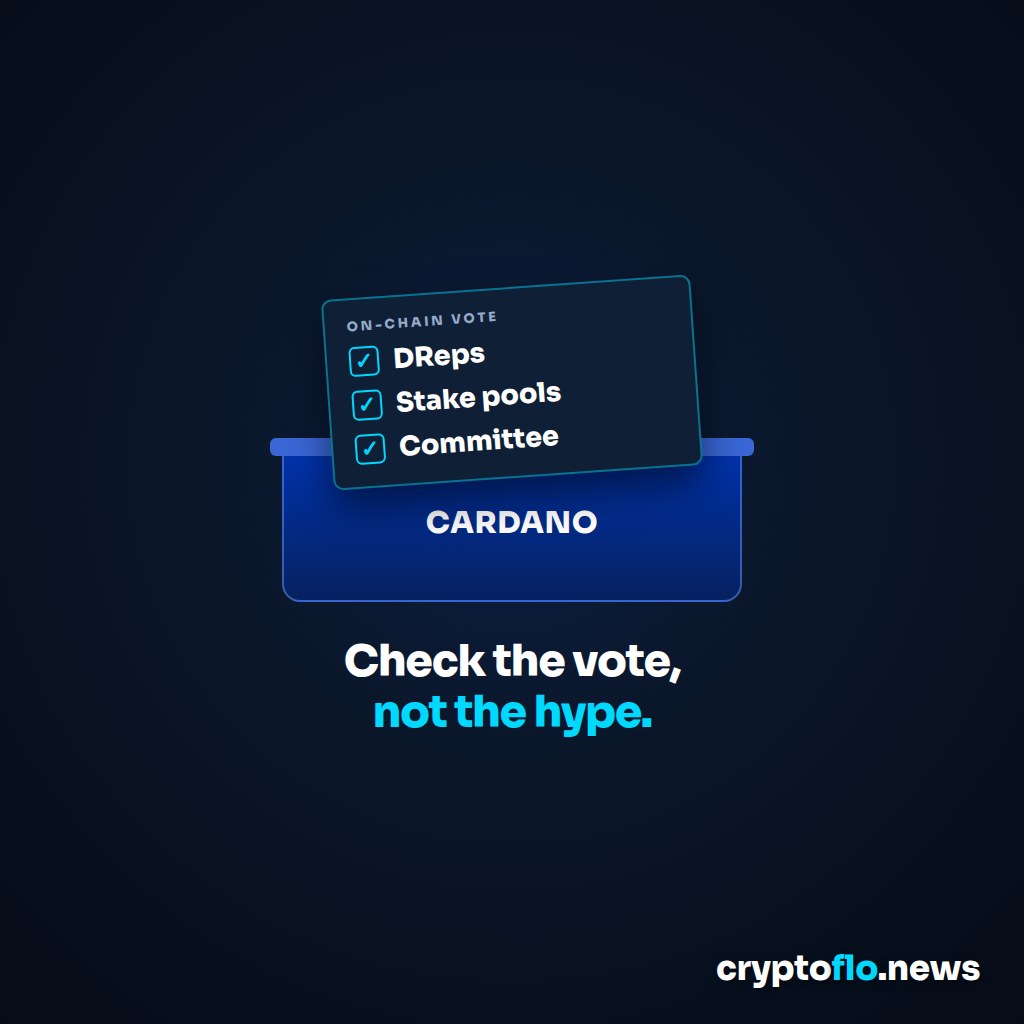
- DReps (delegated representatives), stake pool operators (SPOs) and the Constitutional Committee are the three groups that vote on governance actions such as hard forks and treasury withdrawals.
Knowing this matters when you read the news. An IO blog post, a Cardano Foundation announcement and a ratified on-chain vote are very different kinds of events.
What Actually Moves Cardano News
- Hard forks and protocol upgrades. On July 18, 2026, the van Rossem hard fork moved Cardano to Protocol Version 11, after it was ratified by the network's governance bodies. The next major upgrade is the Dijkstra hard fork, which is due to bring Ouroboros Leios, a big throughput upgrade. As of mid-October 2026, Leios was still in testing, with reported targets ranging from late 2026 to early 2027, and its activation still needs a governance vote.
- Governance votes. Cardano's treasury and rules are decided on-chain. An updated Cardano Constitution took effect on January 24, 2026, and a new Constitutional Committee was ratified in early September 2026. Treasury withdrawals, budgets and committee elections are now regular headlines.
- ETF news. Grayscale withdrew its filing for a spot Cardano ETF on August 7, 2026. As of October 2026, there was no active filing for a US spot ADA ETF that we could confirm, so treat any "Cardano ETF approved" headline with caution until you've checked the SEC's own records.
- Charles Hoskinson's posts and livestreams. The founder is a prolific communicator, and his comments regularly make headlines. They're a genuine source of insight, and also a frequent target for impersonators.
- Ecosystem and DeFi activity. New apps, stablecoins and token standards, and how much value is actually locked on the network.
The Best Sources for Cardano News
Official sources
- Cardano.org news: the community site's official news, including governance outcomes such as constitution updates.
- Input Output blog: the original source for engineering updates, including hard fork details and Leios progress.
- Cardano Foundation: announcements on adoption, standards and the foundation's own governance votes.
- Intersect: development roadmaps, technical committees and governance coordination.
- Official YouTube channels: Input Output, the Cardano Foundation and Charles Hoskinson's own channel are where upgrade explainers, livestreams and founder updates first appear.
Data sources: check the claims yourself
- Cardanoscan and Cexplorer: block explorers for transactions, wallets, stake pools, epochs and protocol parameters. If a headline says a hard fork has happened, the protocol version is right there.
- GovTool: the governance platform for DReps and delegation, where you can see live governance actions and how they're being voted on.
- DefiLlama: an independent view of how much value is locked in Cardano's DeFi apps, useful for checking adoption claims against the numbers.
Analysts and YouTube creators
Cardano has a large, active community of analysts and creators, and the good ones are among the most useful sources you can follow. They explain what an upgrade like Leios actually changes, walk through governance votes and treasury proposals, put ecosystem news in context and cover the price picture. The best ones show their data and reasoning, separate news from their own view, and disclose sponsorships. Pick a few who do that consistently, and pair them with the official and data sources above.
Reporters: established newsrooms
- The Block, Decrypt and Cointelegraph cover Cardano regularly, including hard forks, governance votes and ETF filings.
Cardano Misinformation to Watch For
- Fake giveaways and deepfakes. "Send ADA, get double back" is always a scam. Input Output's official YouTube channel has itself been hijacked to broadcast a deepfake of Charles Hoskinson promoting a fake giveaway. No real project, founder or foundation will ever ask you to send crypto first. (More in how to spot fake crypto news.)
- Hard fork dates repeated after they've moved. Upgrade timelines change, and Cardano's are also subject to governance votes. A date in an old article isn't a schedule. Check Input Output or Intersect for the current one.
- Testnet news reported as mainnet news. Leios has been running on a test network, which is real progress but isn't the mainnet launch.
- ETF headlines without a filing. Check whether an issuer actually has a live filing before believing an "approval is coming" story.
- Governance spin. A proposal being submitted isn't the same as it being ratified. GovTool and the explorers show the real status.
- Targets with no reasoning. A price target is an analyst's view, not news. From someone who shows their data and reasoning, it's worth weighing. A big round number with no case behind it isn't analysis.
A Simple Cardano Source List
You don't need all of these. A lean list might be:
1. The Input Output blog, for engineering and upgrade news
2. Cardano.org news or the Cardano Foundation, for official announcements and governance outcomes
3. GovTool, when a governance vote is in the headlines
4. Cardanoscan, to check what has actually happened on-chain
5. One newsroom, such as The Block, Decrypt or Cointelegraph, for daily news
6. One or two analysts you trust, for context and the bigger picture
Our 15-minute routine shows how to fit a list like this into your day, our guide to reading crypto project announcements helps with upgrade news, and our guide to choosing crypto news sources you can trust explains the thinking behind it.
Where Crypto Flo Fits
Cardano is one of the 15 coins Crypto Flo supports. Crypto Flo is a personalized AI crypto intelligence platform that turns the coins you follow and the sources you choose into a daily audio or text briefing. For each coin it maintains a vetted library of at least 10 YouTube channels and 10 news outlets, and you choose which of them brief you. The sources above are our editorial picks for this guide. Crypto Flo's own library is separate, and you choose from it inside the app. See how Crypto Flo works.
Frequently Asked Questions
Q: What is the best source for Cardano news?
A: There isn't one. A good mix is the Input Output blog for engineering news, Cardano.org or the Cardano Foundation for official announcements, GovTool for governance votes, Cardanoscan to check what has happened on-chain, one established newsroom such as The Block, Decrypt or Cointelegraph, and one or two analysts who show their reasoning.
Q: What is Ouroboros Leios?
A: Leios is a major upgrade designed to greatly increase how many transactions Cardano can process. It's due to arrive with the Dijkstra hard fork. As of mid-October 2026, it was still in testing, with reported targets from late 2026 to early 2027, and its activation still requires a governance vote.
Q: What was the van Rossem hard fork?
A: The van Rossem hard fork activated on July 18, 2026, moving Cardano to Protocol Version 11. It was ratified through Cardano's on-chain governance and laid the groundwork for the next major upgrade, the Dijkstra hard fork.
Q: Is there a spot Cardano ETF?
A: As of October 2026, no. Grayscale withdrew its spot Cardano ETF filing on August 7, 2026, and we couldn't confirm any other active US filing for a spot ADA ETF. Check the SEC's records before trusting an approval headline.
Q: How does Cardano governance work?
A: Governance actions such as hard forks, treasury withdrawals and constitution changes are voted on by three groups: delegated representatives (DReps), stake pool operators and the Constitutional Committee. ADA holders can delegate their voting power to a DRep. You can follow live votes on GovTool.
Q: How do I avoid Cardano giveaway scams?
A: Never send ADA to anyone promising to send more back. That's always a scam, even if the video appears to show Charles Hoskinson or comes from an account that looks official. Real announcements appear on official websites and blogs, never as a request to send crypto.
The Bottom Line
Cardano news is unusually checkable. Upgrades, governance votes and treasury spending all happen in public and on-chain. Use Input Output and the Cardano Foundation for official news, GovTool and Cardanoscan to confirm what has really happened, a good newsroom for daily coverage, and a couple of trusted analysts for context. Separate testnet from mainnet, proposals from ratified votes and real announcements from deepfakes, and you'll be better informed than most of the timeline.
This content was created with AI assistance and may contain errors, always verify before acting. Not financial advice. Always do your own research before making any investment decisions.
Frequently Asked Questions
What is the best source for Cardano news?
There isn't one. A good mix is the Input Output blog for engineering news, Cardano.org or the Cardano Foundation for official announcements, GovTool for governance votes, Cardanoscan to check what has happened on-chain, one established newsroom such as The Block, Decrypt or Cointelegraph, and one or two analysts who show their reasoning.
What is Ouroboros Leios?
Leios is a major upgrade designed to greatly increase how many transactions Cardano can process. It's due to arrive with the Dijkstra hard fork. As of mid-October 2026, it was still in testing, with reported targets from late 2026 to early 2027, and its activation still requires a governance vote.
What was the van Rossem hard fork?
The van Rossem hard fork activated on July 18, 2026, moving Cardano to Protocol Version 11. It was ratified through Cardano's on-chain governance and laid the groundwork for the next major upgrade, the Dijkstra hard fork.
Is there a spot Cardano ETF?
As of October 2026, no. Grayscale withdrew its spot Cardano ETF filing on August 7, 2026, and we couldn't confirm any other active US filing for a spot ADA ETF. Check the SEC's records before trusting an approval headline.
How does Cardano governance work?
Governance actions such as hard forks, treasury withdrawals and constitution changes are voted on by three groups: delegated representatives (DReps), stake pool operators and the Constitutional Committee. ADA holders can delegate their voting power to a DRep. You can follow live votes on GovTool.
How do I avoid Cardano giveaway scams?
Never send ADA to anyone promising to send more back. That's always a scam, even if the video appears to show Charles Hoskinson or comes from an account that looks official. Real announcements appear on official websites and blogs, never as a request to send crypto.
Let AI summarize these channels for you daily
Pick your favorite crypto YouTube channels and news sites. Get a 5-minute AI brief every morning.
Choose Your Sources